
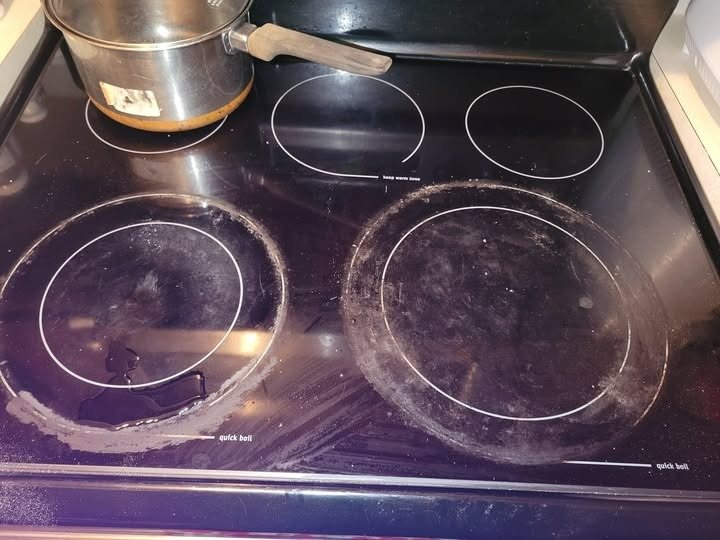
 Pro Tip: After cleaning, apply a thin layer of ceramic cooktop conditioner (optional) to repel future stains.
 Debunking the Myths
“Toothpaste cleans glass stoves”
Not proven — can leave residue or abrasives
“Magic Erasers are safe”
Melamine sponges can micro-scratch — use cautiously
“Vinegar damages glass”
False — safe on tempered glass when used properly
“Only chemical cleaners work”
No — natural methods work well with consistency
 How to Protect Your Stovetop Long-Term
Lift pots, don’t slide them
Prevents scratches and scuffs
Use flat-bottomed cookware
Ensures even heat and less spillage
Clean spills when cool
Easier removal before they bake on
Avoid cast iron with rough bottoms
Can scratch; place a liner if needed
Use lower heat settings
Reduces boiling over and burning
 Prevention saves time — and keeps your investment looking pristine.
Final Thoughts
You don’t need a magic potion to revive your glass stovetop.
You just need three pantry staples — and a few quiet minutes.
So next time you’re staring at a grimy cooktop…
don’t stress.
Grab the baking soda.
Mix the paste.
Wipe with care.
Because real cleanliness isn’t loud.
It’s quiet.
And sometimes,
it starts with a little fizz and a lot of faith.
And that kind of sparkle?
It reflects more than light.
It shows pride in your kitchen — one polished inch at a time.
ADVERTISEMENT
