
Pressure rising. Need to move up timeline. Subject must be gone before next financial review.
Prepared stronger packets for cruise week. Amounts calculated for “permanent solution” within 48–72 hours after consistent use.
I read it twice, because my mind kept trying to refuse it.
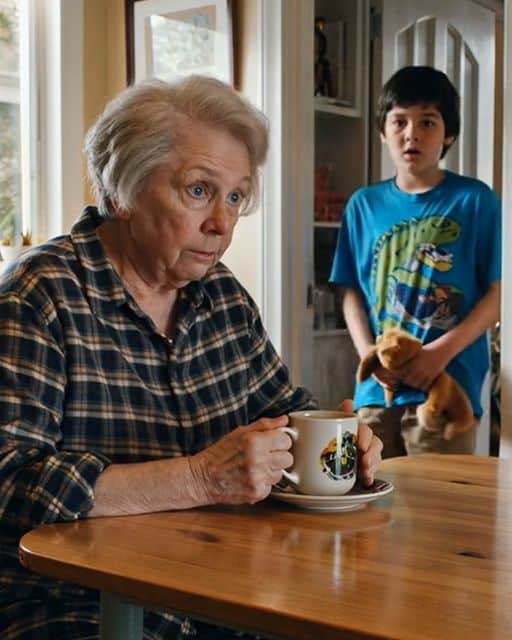
“Grandma?” Damian asked, voice small. “Are you okay?”
I forced myself to look at him. This child had carried knowledge like this alone.
“I’m here,” I said. “And we’re going to stay here. Both of us.”
He nodded, determination settling over his features.
“Then we have to stop her before she gets back,” he said. “Not just so she doesn’t hurt you—but so she can’t hurt anybody else.”
He was right. The documents were horrifying, but we needed proof nobody could brush off. Medical proof. A recording. Something undeniable.
That afternoon, while Damian napped—an actual, gentle nap instead of the heavy, unnatural sleep I’d seen after visits with his parents—I made phone calls.
First, my lawyer, Margaret Chen. She’d handled my estate planning for fifteen years.
“Lucinda,” she said warmly. “How are you? Dean mentioned you’d been having memory trouble. He asked if we should talk about updating your paperwork.”
I closed my eyes. So Dean had been laying groundwork.
“Margaret,” I said, “hypothetically—if someone was giving an older person medication without their knowledge, in a way that made them seem confused, what kind of proof would matter in court?”
There was a pause.
“Lucinda,” she said carefully, “is this happening to you?”
“Let’s call it a strong possibility,” I replied. “I need to know what evidence matters.”
“Medical records showing substances in your system that you weren’t prescribed,” she said. “Documentation of intent. And if possible, a recording—video is best, audio can be powerful depending on how it’s obtained and state law.”
Then she added, voice tightening, “If you’re in immediate danger—”
Continue reading…
